

Every time someone types a query into Google, an enormously complex process unfolds behind the scenes to decide which pages appear first, second, or on page ten. These decisions are shaped by search engine ranking factors, the signals search engines use to evaluate a page’s relevance, quality, and trustworthiness. What are search engine ranking factors? In short, they’re the combined criteria that determine visibility, and understanding them is essential for anyone trying to improve their website’s presence in organic search, whether managed in-house or through a specialist seo company.
This guide breaks down what search engine ranking factors actually are, the most important categories to understand, and how they work together to determine where a page lands on the search engine results page (SERP).
How Does Google Rank Websites?
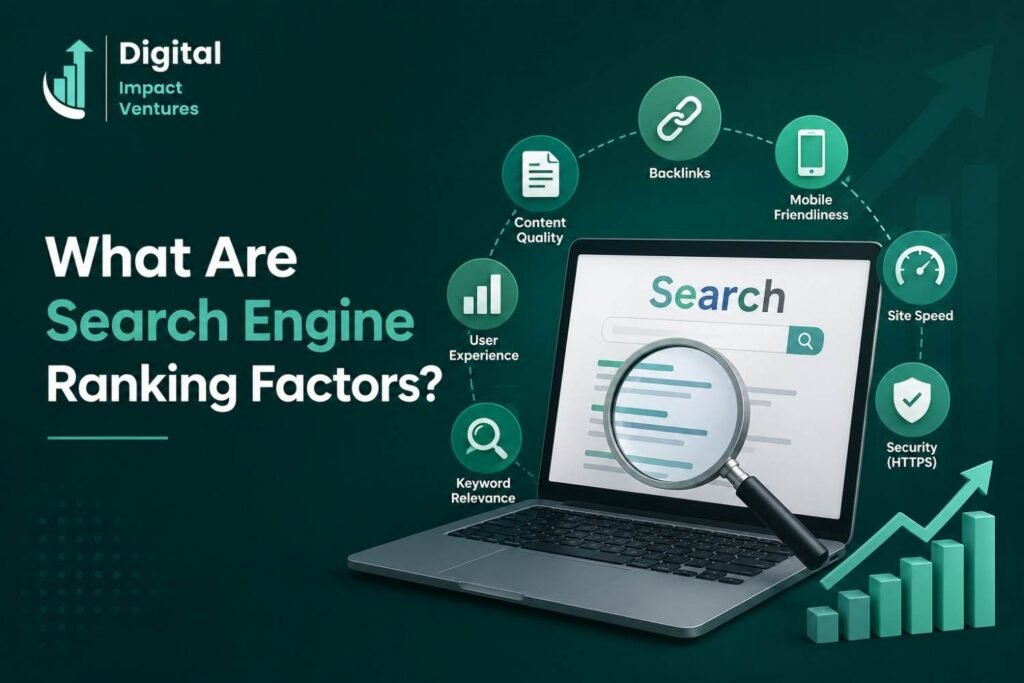
While the exact algorithm is a closely guarded secret and includes hundreds of individual signals, these factors generally fall into a few broad categories: content quality, technical performance, user experience, and off-page authority. Many businesses working with an SEO agency in Colchester find that breaking these categories down individually makes the overall process far less overwhelming.
No single factor determines a page’s ranking on its own. Instead, search engines weigh a combination of signals together, meaning a page that excels in one area but falls short in others may still struggle to rank well. This is why a holistic approach to seo services, rather than focusing on just one element, tends to produce the best long-term results.
Content Quality and Relevance
Content quality remains one of the most influential ranking factors, and for good reason, search engines exist to connect users with the most relevant, useful information for their query. This means content needs to genuinely match search intent, understanding not just what keywords someone used, but what they’re actually trying to accomplish.
High-quality content is typically comprehensive, well-organised, and genuinely useful, rather than thin or created purely to target keywords. Search engines have become increasingly sophisticated at distinguishing between content written to genuinely help users and content written primarily to manipulate rankings, making authentic, well-researched content more important than ever. Many businesses turn to organic seo services specifically to develop this kind of high-quality, sustainable content strategy.
Read More: How UK Businesses Can Build Stronger Online Visibility With SEO and Digital Marketing
Keyword Usage and Optimization
While keyword stuffing, or unnaturally cramming keywords into content, is an outdated and penalised practice, keywords still play an important role in helping search engines understand what a page is about. Thoughtful keyword research helps identify the terms and phrases real users are searching for, which then informs how content is structured and written.
Effective keyword usage today focuses on natural inclusion within high-quality content, covering related terms and concepts a user might expect to find, rather than repeating a single exact phrase multiple times. This is often referred to as semantic search optimization, reflecting how modern search engines understand context and meaning rather than just matching exact words.
Read More: How Does a Colchester SEO Company Increase Organic Traffic?
On-Page Optimization
On-page optimization refers to the elements within a webpage itself that influence how well it ranks. This includes meta descriptions and title tags, header structure, image alt text, and internal linking, all of which help search engines understand what a page is about and how it fits within the wider website.
Well-structured on-page optimization also improves the experience for actual visitors, making content easier to scan, navigate, and understand. Since user experience itself is a ranking consideration, strong on-page optimization tends to support better rankings both directly and indirectly. A clear site structure, with logical categories and consistent internal linking, also helps search engines crawl and understand a website far more efficiently.
Technical SEO Factors
Beyond content and on-page elements, technical performance plays a significant role in how search engines crawl, index, and rank a website. Key technical factors include page speed, mobile-first indexing compatibility, secure connections (HTTPS), and a clean, logical site structure that allows search engines to easily navigate and understand the relationship between pages.
Search engines prioritise websites that load quickly and function well on mobile devices, reflecting the reality that a large proportion of searches now happen on smartphones. A technically sound website removes barriers between users and content, which search engines interpret as a positive quality signal.
Backlinks and Off-Page Authority
Off-page optimization, particularly backlinks / link building, remains one of the most significant ranking factors. How do backlinks affect search rankings? Backlinks, links from other websites pointing to your content, act as a signal of trust and authority. When reputable, relevant websites link to a page, search engines interpret this as an endorsement of that content’s quality and credibility.
Not all backlinks carry equal weight, however. Links from authoritative, relevant websites within a similar industry or topic area tend to have far more impact than links from low-quality or unrelated sites. This is why a thoughtful approach to earning backlinks, through genuinely valuable content and legitimate outreach, matters more than simply accumulating as many links as possible. It’s also a core part of what many best seo companies for small business owners choose to focus on early, since authority-building takes time to compound.
Domain Authority and Trustworthiness
Domain authority, while not an official Google metric, is a widely used concept referring to a website’s overall credibility and likely ranking strength based on its backlink profile, content history, and overall trustworthiness. Older, well-established websites with a strong history of quality content and legitimate backlinks often have an advantage over brand-new domains.
Trust signals also extend to individual pages and authors. Search engines increasingly consider factors related to E-A-T (expertise, authority, trustworthiness), particularly for content covering topics that could impact a reader’s health, finances, or safety.
User Experience Signals
User experience has become an increasingly important part of how search engines evaluate ranking. Signals like how quickly a page loads, how stable the layout is while loading, and how easily users can interact with content all factor into Core Web Vitals, a set of specific technical metrics Google uses to assess user experience.
Beyond these technical metrics, broader engagement signals, such as how long users stay on a page or whether they quickly return to search results, may also provide indirect signals about content quality and relevance, reinforcing the importance of genuinely satisfying user intent.
Search Intent and Content Match
Search intent refers to the underlying reason behind a search query, whether someone is looking for information, trying to make a purchase, seeking a specific website, or comparing options. Ranking well requires content that matches this intent accurately, rather than simply targeting the right keyword.
For example, a page optimised for a keyword but written as a sales pitch won’t rank well if most users searching that term are actually looking for educational information. Understanding and matching search intent has become one of the most important skills in modern SEO, often more impactful than technical optimization alone. This is why businesses expanding across borders often invest in dedicated international seo services, since search intent can vary significantly between regions and languages.
Mobile-Friendliness and Page Speed
With the majority of searches now happening on mobile devices, mobile-friendliness has become a critical ranking factor rather than a nice-to-have. Google uses mobile-first indexing, meaning it primarily evaluates the mobile version of a website when determining rankings, even for searches performed on desktop.
Page speed similarly plays a significant role, since slow-loading pages create a poor user experience and often lead to higher bounce rates. Optimising images, reducing unnecessary code, and using reliable hosting all contribute to faster load times and, in turn, better ranking potential.
Local SEO Ranking Factors
For businesses targeting local customers, additional ranking factors come into play, including proximity to the searcher, the completeness and accuracy of a Google Business Profile, and the consistency of business name, address, and phone number information across the web. Businesses searching for an seo services near me provider often specifically want this kind of local expertise built into their strategy.
Online reviews also play a meaningful role in local search rankings, with both the quantity and quality of reviews influencing visibility in local search results and map listings, alongside traditional organic ranking factors.
Working with an International SEO Agency
For businesses operating across multiple countries or targeting audiences in different languages, ranking factors become even more layered. An international seo agency typically manages hreflang tags, region-specific content, and localised keyword research to ensure each market is targeted appropriately, rather than applying a single strategy globally and hoping it translates.
How Search Engines Weigh These Factors Together
While it’s helpful to understand ranking factors individually, it’s important to remember that search engines evaluate them together, not in isolation. A page with excellent content but poor technical performance may still underperform, just as a technically flawless page with thin, unhelpful content is unlikely to rank well regardless of its speed or structure.
This is why effective seo company strategies address multiple factors simultaneously, rather than focusing exclusively on one area, such as backlinks or keyword optimization, while neglecting others like content quality or technical performance.
Why Ranking Factors Continue to Evolve
Search engines regularly update their algorithms, refining how they weigh different ranking factors as user behaviour, technology, and expectations change. What worked several years ago, such as heavy keyword repetition or accumulating large volumes of low-quality backlinks, is far less effective, or even penalised, today.
Staying informed about how ranking factors evolve, rather than relying on outdated tactics, is essential for maintaining and improving search visibility over the long term. This ongoing evolution is also why SEO is best approached as a continuous process rather than a one-time project.
Final Thoughts
Search engine ranking factors encompass a wide range of signals, from content quality and keyword relevance to technical performance, backlinks, and user experience. No single factor guarantees strong rankings on its own; success comes from addressing multiple areas thoughtfully and consistently over time.
For businesses and website owners looking to improve their search visibility, understanding these ranking factors provides a solid foundation for building an effective, sustainable SEO strategyone that focuses on genuinely serving users rather than attempting to manipulate search engines directly.
Ready to improve your website’s search performance? Digital Impact Ventures can help you develop a tailored SEO strategy focused on stronger visibility, sustainable organic growth, and long-term results. Get in touch with Digital Impact Ventures today to discover how our SEO expertise can help your business grow online.
Frequently Asked Questions
What are search engine ranking factors?
Ranking factors are the signals search engines use to evaluate and rank web pages, including content quality, technical performance, backlinks, and user experience. No single factor determines rankings on its own.
How does Google rank websites?
Google uses hundreds of signals grouped into categories like content relevance, technical performance, backlinks, and user experience. These factors are weighed together algorithmically to determine a page’s position in search results.
How do backlinks affect search rankings?
Backlinks act as trust signals, showing search engines that other websites vouch for your content. Links from authoritative, relevant sites carry more weight than links from low-quality or unrelated websites.
What is search intent and why does it matter for SEO?
Search intent refers to the reason behind a search query — informational, navigational, or transactional. Content must match this intent accurately, not just include the right keywords, to rank well.