
If you have ever typed a question into Google and wondered why certain websites appear at the top while others stay buried on page two, the answer is SEO. Understanding what SEO is and how it works for beginners is one of the most searched questions in digital marketing today. Most business owners have heard the term, but far fewer understand what it means or why some brands dominate search results while others remain invisible. Whether you are searching for seo services near me or simply looking to sharpen your knowledge, this guide answers all of those questions in plain language with no jargon assumed.
Read More: How Does a Colchester SEO Company Increase Organic Traffic?
What Does SEO Stand For?
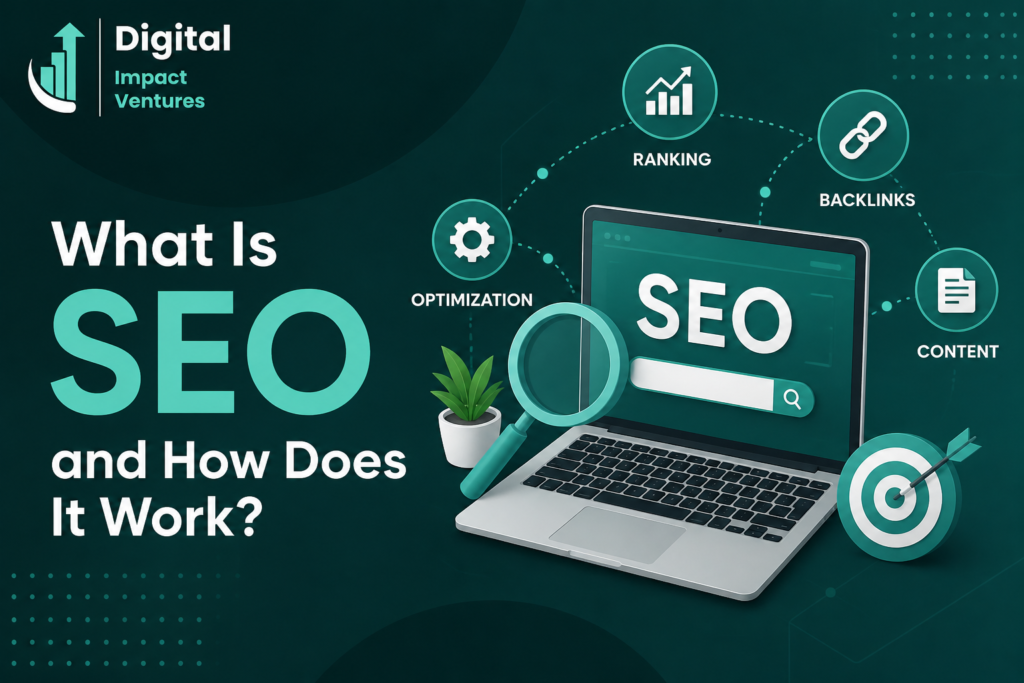
SEO stands for Search Engine Optimisation. It is the process of improving your website so that it appears higher in the organic, meaning unpaid, results on search engines like Google, Bing, and others when people search for topics related to your business, product, or service.
The key word here is organic. Unlike paid advertising, where you pay for each click, organic seo services earn visibility naturally by improving how a website communicates with search engines. When done well, SEO becomes one of the most cost effective and long lasting channels in your marketing strategy, working around the clock without a recurring ad spend attached to every visit. Choosing the right seo company to support this process can make the difference between slow, uncertain progress and consistent, compounding growth.
Why Does SEO Matter?
When people need information or are ready to buy, they search. Organic search traffic consistently outperforms almost every other digital channel for long-term return on investment. Websites on the first page receive the vast majority of clicks, and those that do not appear there receive very little traffic regardless of how good their product is. Local SEO for small business is one of the fastest growing areas of the discipline, driven by the significant rise in proximity-based searches where people look for services in their area.
How Do Search Engines Actually Work?
To understand SEO, it helps to understand how search engines work behind the scenes. The Google Search Algorithm processes an enormous number of signals to decide which pages deserve to appear for any given query, and understanding how Google decides which websites rank first is central to building an effective strategy. The process of crawling and indexing websites breaks down into three clear stages.
Crawling is where it starts. Search engines use automated programmes called bots that travel across the internet, following links from page to page to discover new content.
Indexing comes next. Once a page is crawled, the search engine stores it in a vast database called an index. If your page is not in the index, it will not appear in any search results regardless of how good the content is.
Ranking is the final and most competitive stage. When someone searches, the engine pulls relevant pages from its index and orders them by quality, relevance, and authority. Google ranking factors include the quality of your content, the strength of your backlink profile, the technical health of your site, and the overall experience your pages deliver to users. Hundreds of signals feed into this decision, and that is exactly where SEO comes in.
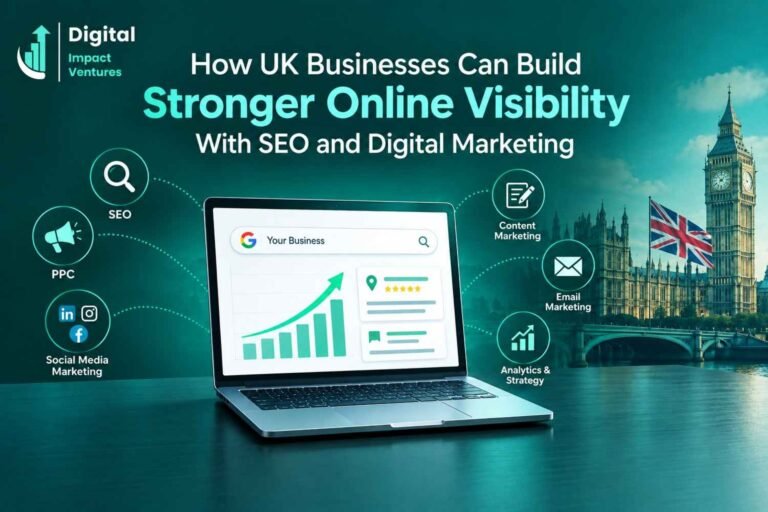
Read More: How UK Businesses Can Build Stronger Online Visibility With SEO and Digital Marketing
The Three Pillars of SEO
Modern SEO is built on three interconnected areas. Understanding each one and how they work together is the foundation of any effective strategy.
On-Page SEO
On-page SEO covers everything you do on your own website to make individual pages more relevant and useful for the topics you want to rank for. This includes the words on the page, the headings and structure, the title tag and meta description that appear in search results, the images and how they are labelled, and the internal links that connect one page on your site to another.
Understanding what are the main types of SEO, on-page, off-page, and technical, is the starting point for building a complete strategy. At the heart of on-page SEO is keyword research, the process of finding what phrases your audience types into search engines. How do keywords affect SEO rankings comes down to relevance and intent. A page that contains the right keywords but fails to match what the searcher actually wants will not rank well. Content marketing and SEO work most effectively when combined, because well-structured, genuinely helpful content satisfies both the reader and the algorithm at the same time.
Off-Page SEO
Off-page SEO refers to everything that happens outside your website that influences how search engines perceive your authority and credibility. How does link building help SEO come down to trust. The most significant off-page factor is backlinks, links from other websites pointing to yours. When a reputable website links to your content, search engines interpret this as a signal of credibility.
Not all backlinks carry the same weight. A link from a well-established, authoritative website is far more valuable than dozens from low-quality sources. Professional off page seo services handle this systematically, identifying link-building opportunities, managing outreach, and tracking authority gains over time. For B2B organisations, b2b seo services and a specialist b2b seo agency are particularly valuable, since the strategy and link-building targets differ significantly from consumer-focused campaigns.
Technical SEO
Technical SEO is the behind-the-scenes work that ensures search engines can efficiently crawl, read, and index your website. No matter how good your content is, if there are technical barriers stopping search engines from accessing your pages, your rankings will suffer.
Key areas of technical SEO include site speed, mobile friendliness, secure HTTPS connections, a clean site structure, and the absence of broken links or duplicate pages. Page speed and Core Web Vitals, a set of performance measurements from Google, assess how quickly a page loads, how visually stable it is, and how responsive it feels to users. A technical seo audit service reviews all of these factors systematically, identifying the issues that are most likely to be suppressing your rankings. For online retailers, an ecommerce seo audit adds an additional layer of analysis covering product pages, category structure, duplicate content from filters, and schema markup for products and reviews.
|
Pillar |
What It Covers |
Key Activities |
Goal |
|
On-Page SEO |
Everything on your website pages, including content, keywords, structure, and internal links. |
Keyword research, title tags, meta descriptions, heading structure, content quality, internal linking, image alt text |
Make each page as relevant, useful, and well-structured as possible for the topics you want to rank for. |
|
Off-Page SEO |
Activities outside your website that help build authority, trust, and credibility. |
Backlink building, digital PR, guest posting, brand mentions, social signals, industry citations |
Build website authority and earn trust signals that indicate your site is credible and valuable. |
|
Technical SEO |
The behind-the-scenes infrastructure that helps search engines crawl, index, and understand your website. |
Site speed, mobile friendliness, Core Web Vitals, HTTPS, crawl error fixes, XML sitemap, schema markup |
Remove technical barriers so search engines can access, understand, and rank your pages effectively. |
What Is E-E-A-T and Why Does Google Care?
In 2026, one of the most important concepts in SEO is the E-E-A-T Google guidelines framework, which stands for Experience, Expertise, Authoritativeness, and Trustworthiness. These are the qualities Google looks for when evaluating whether a piece of content genuinely deserves to rank.
Experience refers to first-hand knowledge. Expertise means demonstrable skill. Authoritativeness is about how your website and authors are regarded in your industry. Trustworthiness covers accuracy and reliability. Publishing content written or reviewed by credible people is not just good practice in 2026. It is an increasingly important ranking factor.
How Is AI Changing SEO in 2026?
Search is evolving faster than at any point in the last decade. Google now answers many queries directly through AI Overviews, which appear at the top of results and summarise an answer without the user needing to click through to a website. Tools like ChatGPT, Perplexity, and Gemini have also become search destinations in their own right, answering questions without always sending traffic to individual websites.
This shift has given rise to two emerging disciplines. Answer Engine Optimisation, known as AEO, focuses on structuring content so AI systems select it as the source for their answers. Generative Engine Optimisation, known as GEO, focuses on ensuring your brand is trusted and cited by tools like ChatGPT and Perplexity. For businesses with audiences across multiple countries, international seo services are increasingly important. Working with an international seo agency ensures visibility is optimised for each target market across different search engines and AI platforms. The fundamentals have not changed.
How Long Does SEO Take to Work?
The honest answer depends on your starting point, your competition, and how consistently you invest. For most websites, meaningful results begin appearing within three to six months, with competitive rankings taking longer. Many businesses start by searching for seo services near me to find local experts who understand their market, while others look specifically for the best seo companies for small business that combine strategic depth with hands-on attention. SEO is not a switch flipped once and forgotten. It is an ongoing discipline that compounds over time, with every piece of content, backlink, and technical improvement contributing to a cumulative position that grows stronger with each passing month.
SEO vs Paid Advertising: What Is the Difference?
Paid advertising delivers instant visibility but stops the moment your budget does. SEO builds organic visibility that compounds over time. The two work well together, with paid ads generating immediate traffic while SEO builds long term momentum. For businesses trading globally, combining paid campaigns with international seo services managed by a specialist international seo agency ensures consistent visibility across every target market.
Common SEO Mistakes to Avoid
Stuffing keywords unnaturally, buying low-quality backlinks, copying content from other websites, and ignoring mobile experience are all practices that either fail to help or invite penalties from search engines. SEO in 2026 rewards genuine helpfulness, not the appearance of it. Treating SEO as a one-time project rather than an ongoing discipline is one of the most common reasons businesses see initial progress followed by a plateau.
Final Thoughts
SEO is the practice of making your website as useful, trustworthy, and accessible as possible to both users and search engines. It covers the content on your pages, the authority your site builds over time, the technical health of your website, and your growing visibility across AI-powered platforms.
For businesses looking for local expertise, a trusted SEO agency in Colchester can provide the strategic guidance needed to compete in both local and national results. Whether you need one of the best seo companies for small business or a full-service seo company to manage every aspect of your strategy, the right professional support makes the process significantly more efficient and the results far more consistent. Partner with a proven SEO agency in Colchester offering organic seo services tailored to your goals, and the rankings will follow. Ready to strengthen your online presence? Get in touch with Digital Impact Ventures to discuss your SEO goals and explore the right strategy for your business.
Frequently Asked Questions
What is SEO and how does it work?
SEO, or Search Engine Optimisation, is the process of improving your website so it appears higher in unpaid search results on Google. It works through three stages: crawling, indexing, and ranking, using content quality, backlinks, and technical performance as the main signals.
How long does SEO take to show results?
For most websites, SEO begins showing meaningful results within three to six months. Competitive industries may take longer. Unlike paid advertising, SEO compounds over time, meaning the effort you invest today continues to build visibility and organic search traffic long into the future.
What are the main types of SEO?
The three main types of SEO are on-page SEO, which covers content and keywords; off-page SEO, which focuses on backlinks and authority; and technical SEO, which ensures search engines can efficiently crawl and index your website. All three work together for best results.
What is the difference between SEO and paid advertising?
Paid advertising delivers instant visibility but stops the moment your budget runs out. SEO builds organic visibility that compounds over time at no cost per click. Many businesses use both together, with paid ads generating immediate traffic while SEO builds long-term sustainable rankings.